ALS Med
Home
OUR SERVICES
  • Event Medical Cover
  • First Aid Training
About Us
JOIN OUR TEAM
Contact Us
Staff Zone
ALS Med
Home
OUR SERVICES
  • Event Medical Cover
  • First Aid Training
About Us
JOIN OUR TEAM
Contact Us
Staff Zone
More
  • Home
  • OUR SERVICES
    • Event Medical Cover
    • First Aid Training
  • About Us
  • JOIN OUR TEAM
  • Contact Us
  • Staff Zone
  • Sign In
  • Create Account

  • My Account
  • Signed in as:

  • filler@godaddy.com


  • My Account
  • Sign out

Signed in as:

filler@godaddy.com

  • Home
  • OUR SERVICES
    • Event Medical Cover
    • First Aid Training
  • About Us
  • JOIN OUR TEAM
  • Contact Us
  • Staff Zone

Account

  • My Account
  • Sign out

  • Sign In
  • My Account

Soft Tissue Injuries (Sprains / Strains)

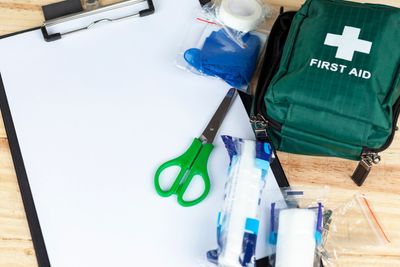
First aid kit, scissors, and medical supplies on a clipboard.


What is a soft tissue injury?

A soft tissue injury affects muscles, ligaments, tendons, or the soft tissues under the skin. Common causes at events include slips/trips, sudden twisting injuries, sports activity, and impacts.


Common symptoms

  • Pain and tenderness (localised to the injured area)
  • Swelling and stiffness
  • Bruising/discolouration
  • Reduced range of movement
  • Pain on weight-bearing (leg/ankle injuries) or gripping/lifting (wrist/hand injuries)


What you can do straight away (first 24–72 hours)

Aim: reduce pain/swelling, protect function, and avoid making the injury worse.


1) Protect & rest (relative rest)

  • Avoid the activity that caused the pain.
  • Keep moving gently within comfort to avoid stiffness (unless advised otherwise).


2) Elevate

  • If it’s a limb injury, raise it above heart level when possible.


3) Cold therapy

  • Apply a cold pack (wrapped in a cloth) for 10–20 minutes, repeat every few hours as needed.
  • Don’t apply ice directly to skin.


4) Compression (if tolerated)

  • A tubular bandage/light wrap can help reduce swelling.
  • It should feel supportive, not tight (watch for pins and needles, increasing pain, colour change).


5) Pain relief

  • Paracetamol can help with pain.
  • Ibuprofen/NSAIDs      may help some people, but avoid them if you:
    • have stomach ulcers/bleeding, significant kidney disease, are on blood thinners, have uncontrolled asthma triggered by NSAIDs, or are pregnant       (ask a clinician/pharmacist).
  • If unsure, ask our clinician on site or a pharmacist.


Gradual recovery (after the first few days)

  • Start gentle mobility and return to activity gradually.
  • If the joint feels unstable, painful to weight-bear, or you keep “giving way”, you may need assessment and possibly imaging/physio referral.


Red flags – seek urgent medical assessment now (999/ED)

  • Severe pain, obvious deformity, or you think it may be broken/dislocated
  • Inability to weight-bear for 4 steps after an ankle/foot injury
  • Numbness/tingling, weakness, or loss of function
  • Limb looks pale/blue/cold, or swelling is rapidly increasing
  • Severe calf pain/swelling, especially with breathlessness or chest pain (possible clot)
  • Suspicion of neck/back injury after a fall/impact


What ALS Med may do on-site

  • Assessment (history, examination, circulation/sensation/movement checks)
  • Basic supportive care: cooling, compression advice, strapping/splinting, mobility advice
  • Pain relief advice and signposting
  • Referral to Minor Injuries Unit / ED / GP / physio where appropriate
  

🔒 ALS Med – Patient Advice & Clinical Governance Statement

This patient advice is provided by ALS Med Ltd, a provider of event medical services delivered by registered healthcare professionals, including Paramedics, Specialist Paramedics, Emergency Care Practitioners (ECPs), Doctors, and Nurses.

  • The information reflects current UK clinical guidance, including the National Institute of Care Excellence (NICE), Royal College of Emergency Medicine (RCEM), and Joint Royal Colleges Ambulance Liaison Committee (JRCALC) aligned pre-hospital practice, and is intended to support patients following clinical assessment and treatment at events.
  • While every effort is made to ensure accuracy and best practice, this advice is general in nature and cannot account for changes in symptoms or individual circumstances after leaving the event medical environment.
  • Patients are advised to monitor their condition and follow the guidance provided. If symptoms worsen, fail to improve, or new concerns arise, further medical advice should be sought via NHS 111, your GP, or 999 in an emergency.

ALS Med Ltd is committed to delivering safe, effective, responsive, and well-led care in accordance with the Health and Social Care Act 2008 (Regulated Activities) Regulations, and nationally recognised clinical guidelines for emergency and urgent care.


Last reviewed: 10/12/2025
Next review due: 10/12/2028

ALS Med Ltd.

West Midlands HQ

Registered in England & Wales Company Number: 14760312

Email: events@med-als.com

Email: info@med-als.com

Email: firstaidtraining@med-als.com

Copyright © 2026 ALS Med Ltd

  • Event Medical Cover
  • First Aid Training
  • About Us
  • Privacy Policy
  • Contact Us
  • Terms & Conditions

GROUP DISCOUNT FOR FIRST AID TRAINING

Click below to see our courses and contact us for more details

See More!

This website uses cookies.

We use cookies to analyze website traffic and optimize your website experience. By accepting our use of cookies, your data will be aggregated with all other user data.

DeclineAccept